

WARNER BROS.
WARNER BROS.
Studio Economics $10B Next-Gen Distribution SaaS
Re-Architecting a Stalled FinTech Platform worth $10B+ in Sales
NDA in PLACE
Confidentiality Notice: Certain information, metrics, and identifying details in this case study have been anonymized, generalized, or omitted to comply with non-disclosure agreements and protect proprietary client data. Specific names and restricted identifiers have been replaced with general descriptions.
Scope: Executive Design Leadership, AI Synthesis, Information Architecture
Tools: Figma (Design Tokens), Generative AI (LLM Analysis), System Mapping
Platform: Next-Gen Global Deal & Contract Management
The Human Friction
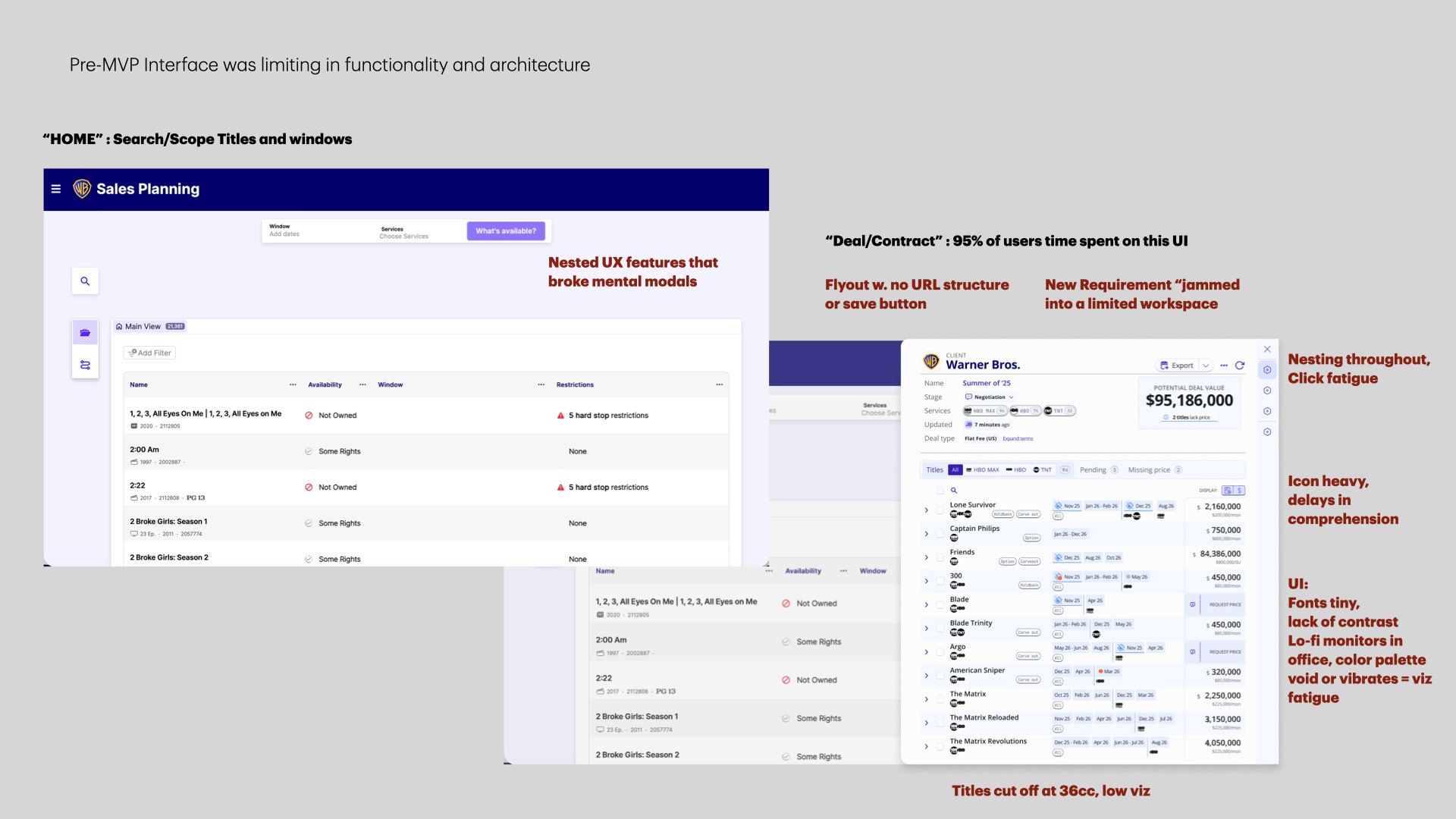
For over 18 months, an external consultant group tried to automate Content Sales Planning for post-theatrical deal negotiations into a rigid, one-size-fits-all CRM. But live content licensing isn't a simple assembly line. It is a fluid, high-stakes conversation. Force-fitting complex sales flows into narrow sidebar flyouts created friction, squeezed critical financial matrices into unusable spaces, and ultimately stalled user adoption. The system was designing for data, rather than for the people making the deals and the clients (services Like Netflix, HBO and Linear networks.)
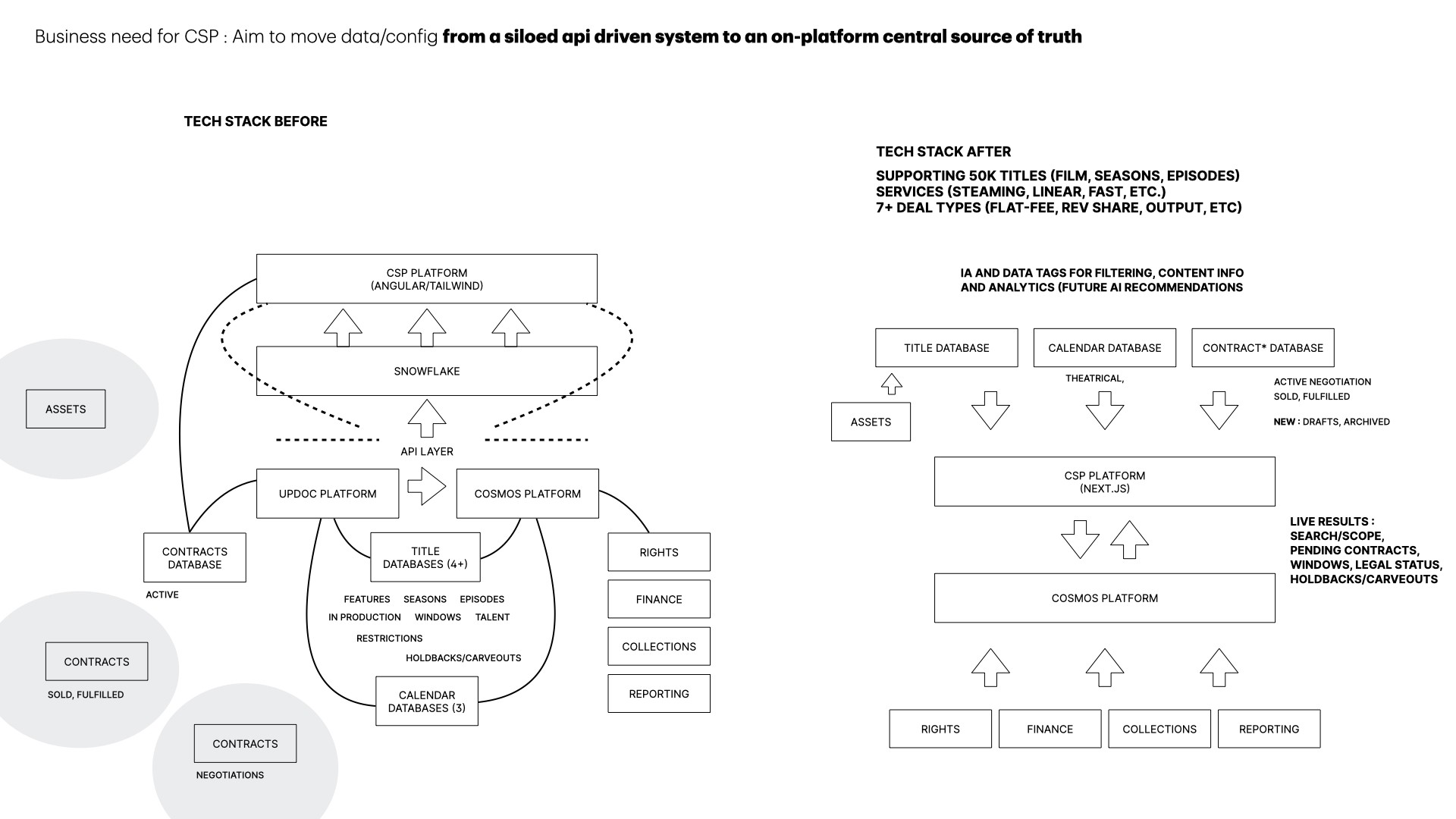
Legacy workflows consistent of cross-referencing numerous excel documents, an early title availability search tool, multi-department communications (email, chat) across legal, client contracts and the sales team. The need was focused on a modernized way of taking the disperite knowledge bases, negotiation and change order workflows into single global platform.
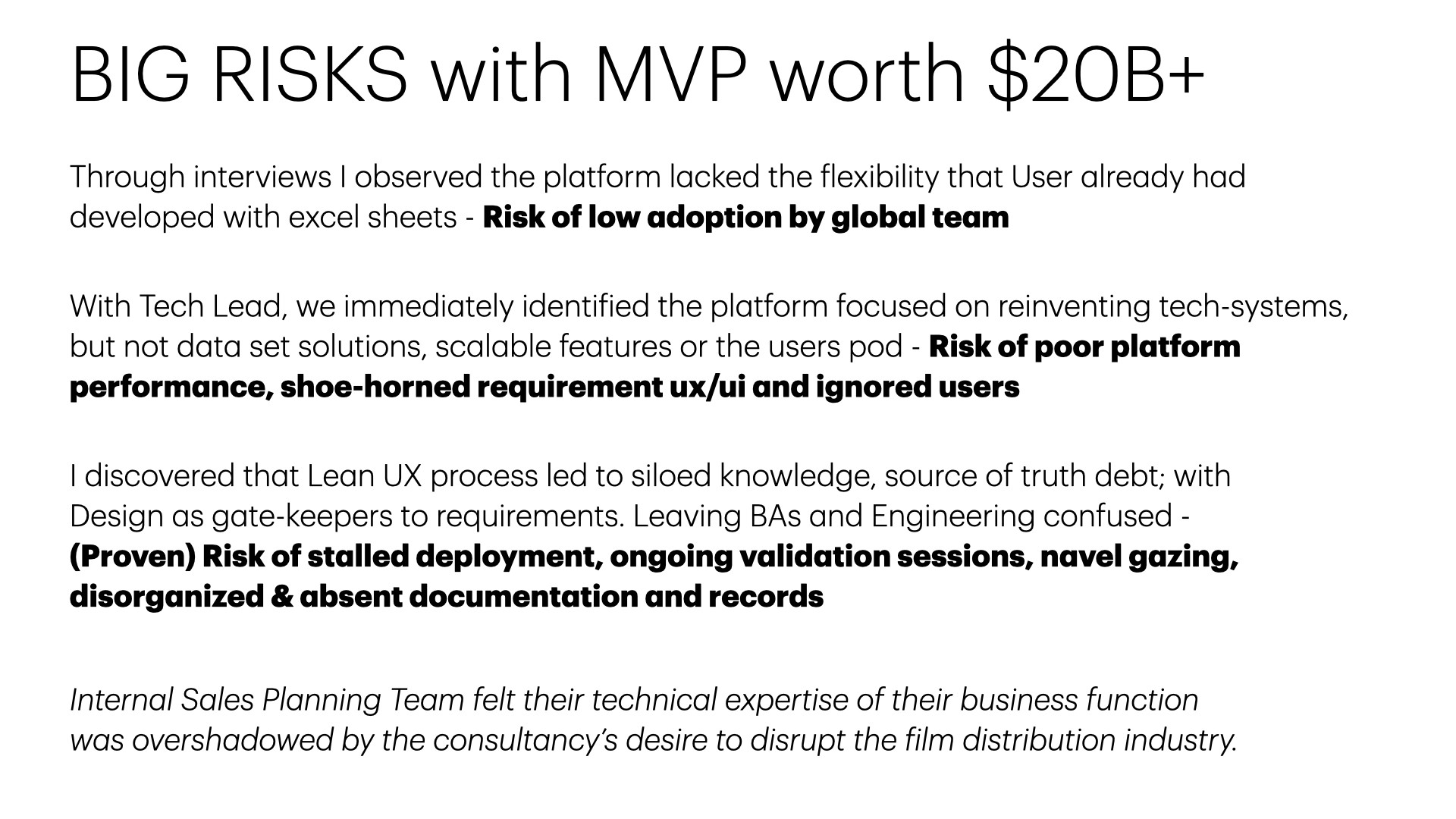
"Internal Sales Planning Team felt their technical expertise of their business function was overshadowed by the consultancy’s desire to disrupt the film distribution industry."
Through my project handoff with the outgoing consultant Design Lead, I discovered a Lean UX process that over the tenure evolved into navel-gazing, knowledge gate keeping, and echo-chamber validation sessions.
Understanding the Business
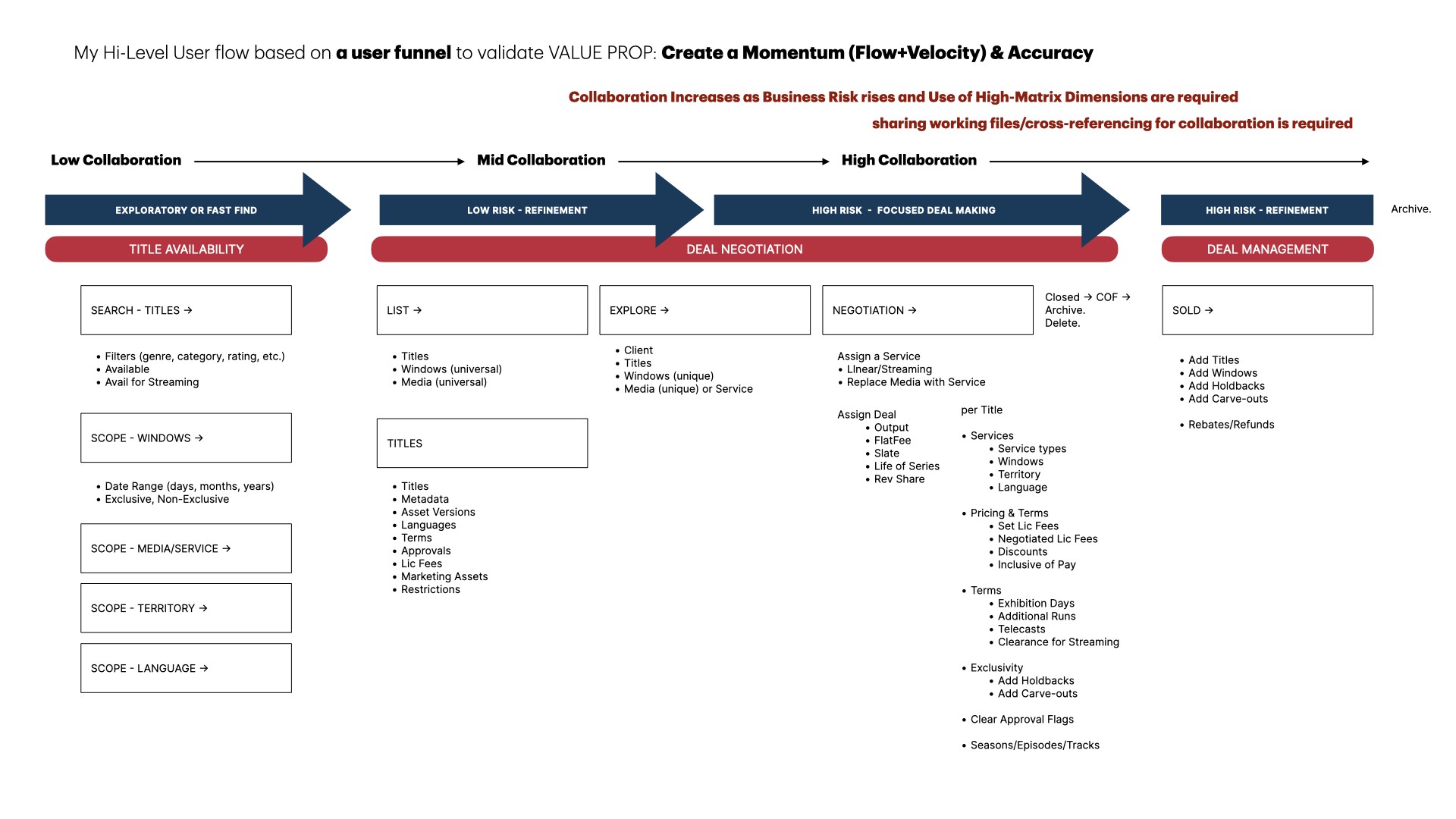
The Global Content Sales Planning team as the primary users worked with three stages, the first and most critical became the user journey to search, scope and package title for the sales and marketing teams.
I teamed up with the Director of Technology and BAs to create a golden record for all content (film, television/episodes) and their variants across edits, language, territory and metadata attributes. Creating a way for teams could live and responsive scoping query results from a single database.
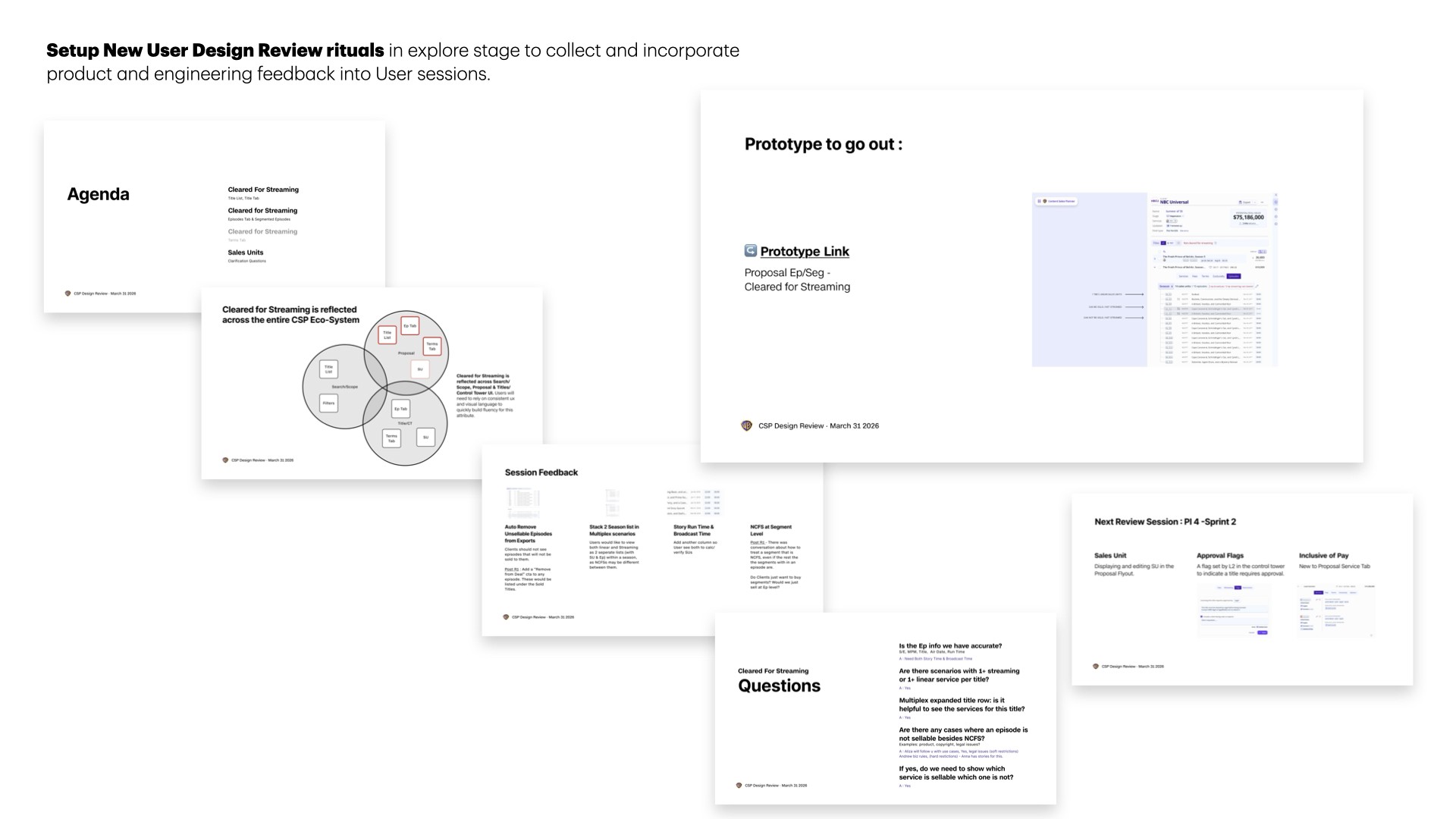
Removing the silos, I set up new rituals with the Scrum Master, Product Leader, and Engineer Lead with the BAs, Designers and Engineers. We examined the true business needs & culture that takes a contract from proposal through negotiation, closing it and a managing change orders from clients.
Uncovering the Unspoken Workflow
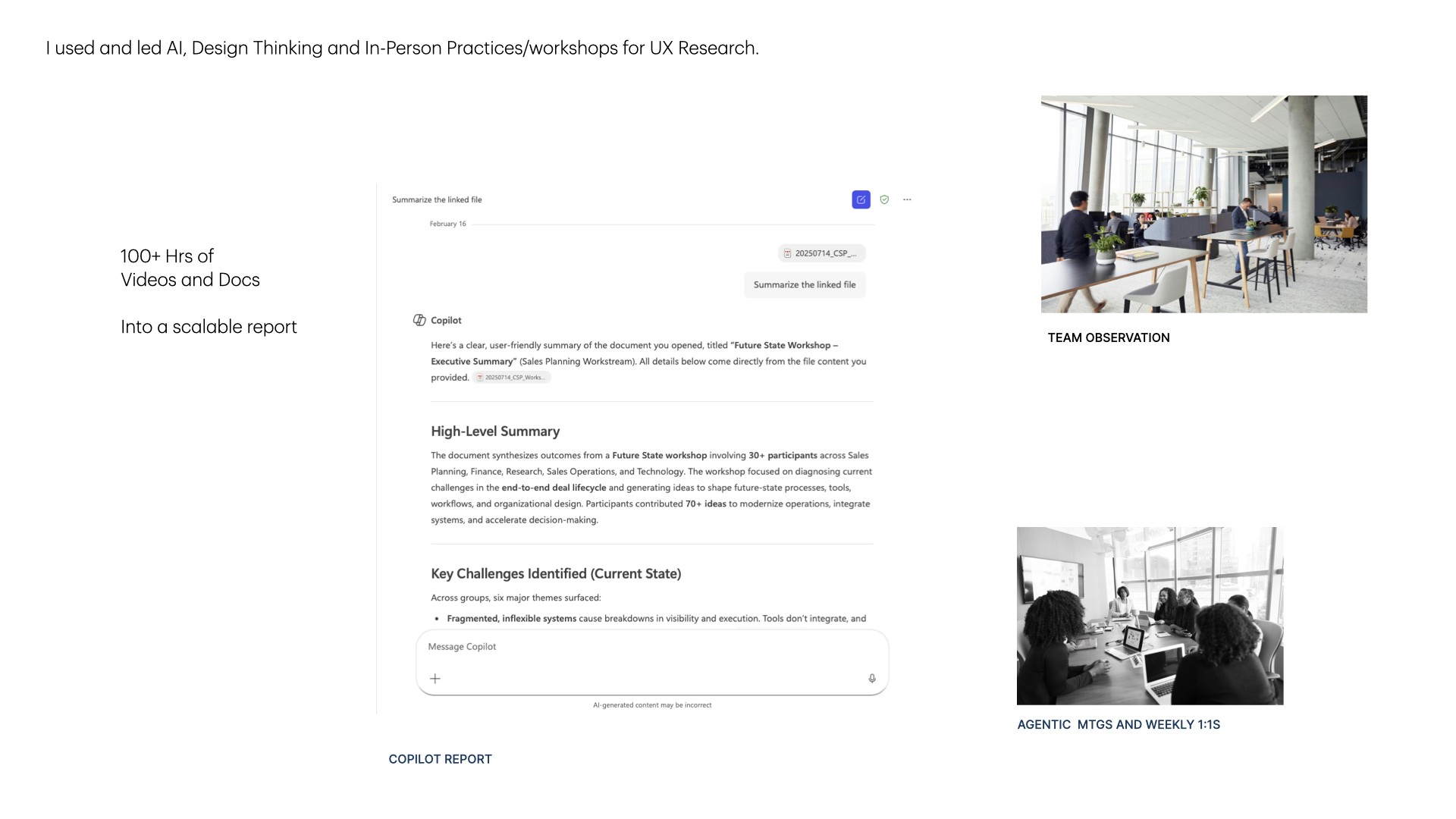
Taking over the project meant stepping back to listen. I synthesized over 30 hours of raw user interviews and a 4-wk handoff using custom AI prompts to catch subtle behavioral patterns, nuanced calculations and high-matrix workflows; pairing with direct observation of how the team actually worked across their multi-monitor setups.
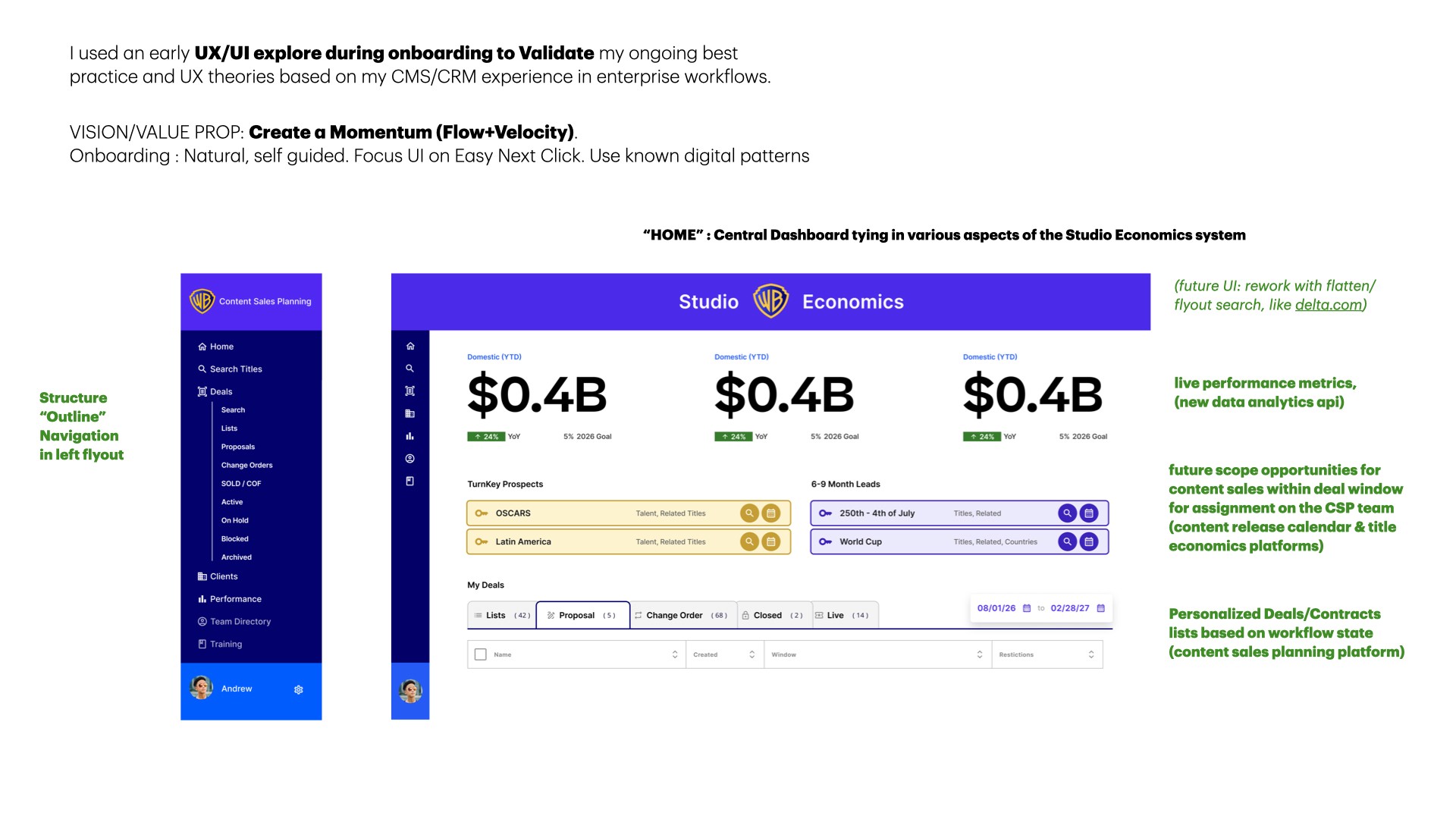
I then crafted my hypothysis that "Users are experts in their workflow, and do not need everything solved for them. They need a centralized tool that is familiar as a spreadsheet to work faster, together." That meant the UX/UI Goal was Momentum. In other words, they wanted a tool that supported speed, accuracy and got them into a flow.
Sales planners needed space, clarity, and speed. They didn't need another cramped interface or strict ux guide-rails; they needed a flexible workspace that mirrored the mental model of a high-volume deal and the culture of their work.
Building for Fluidity
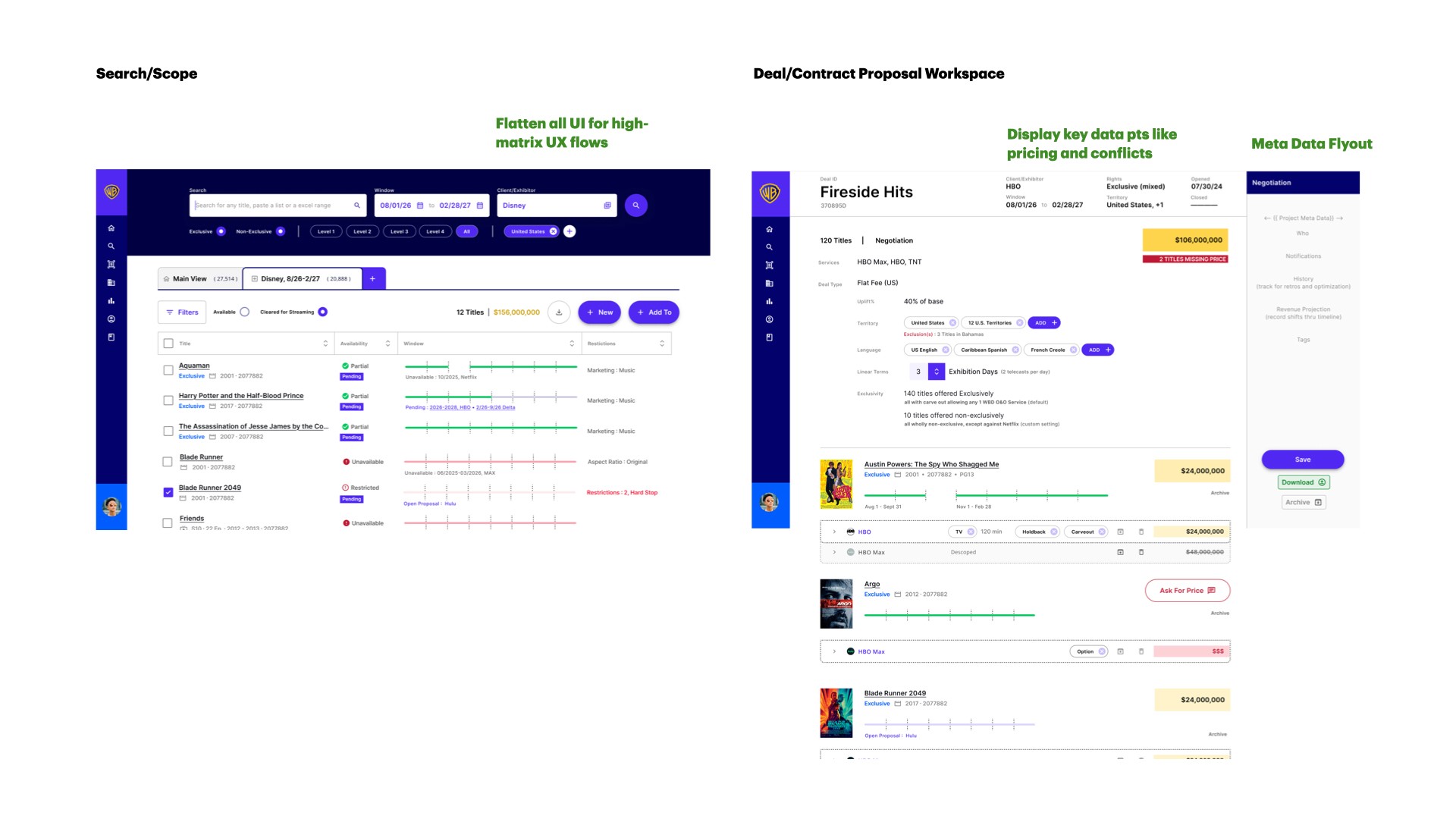
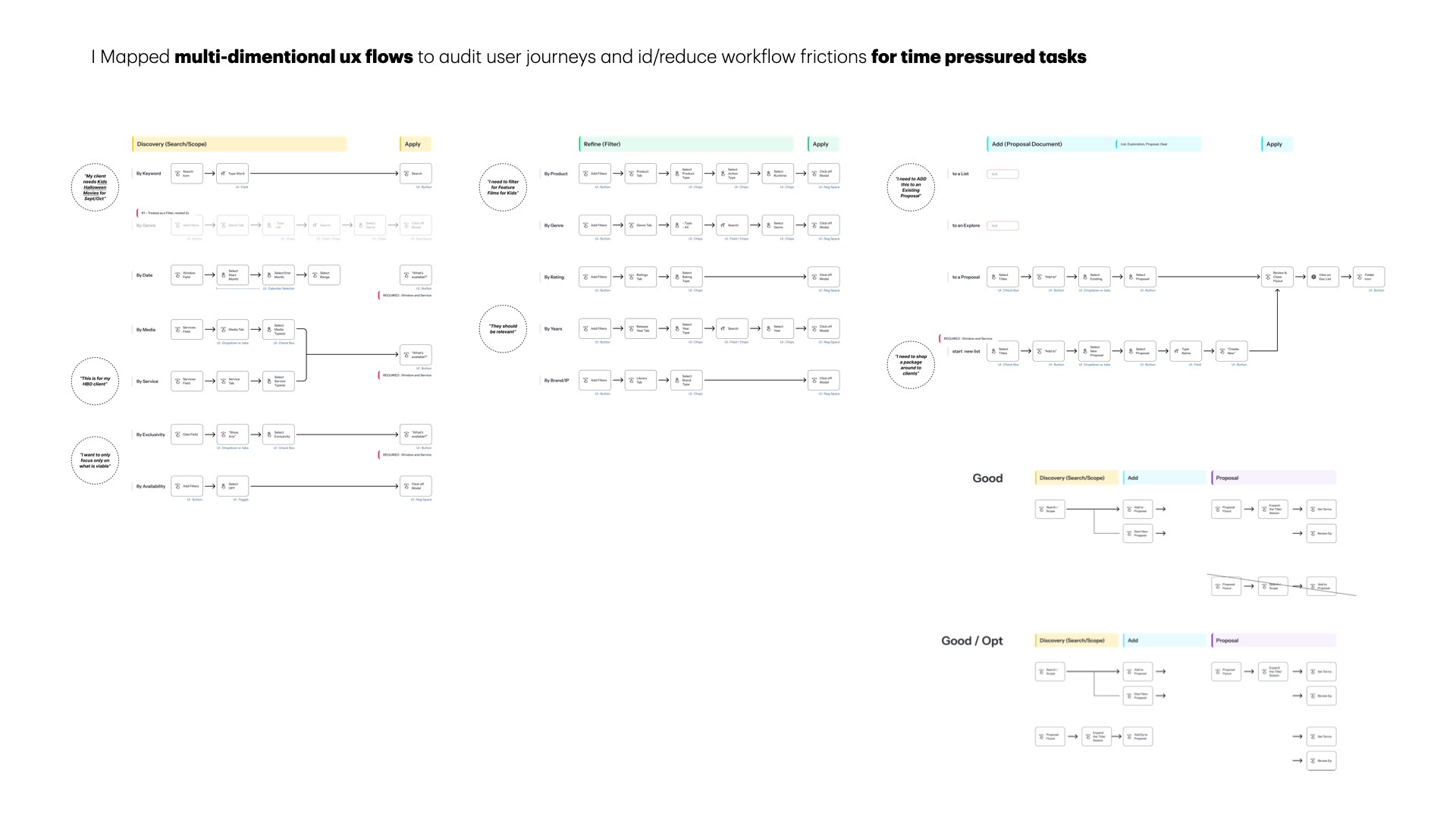
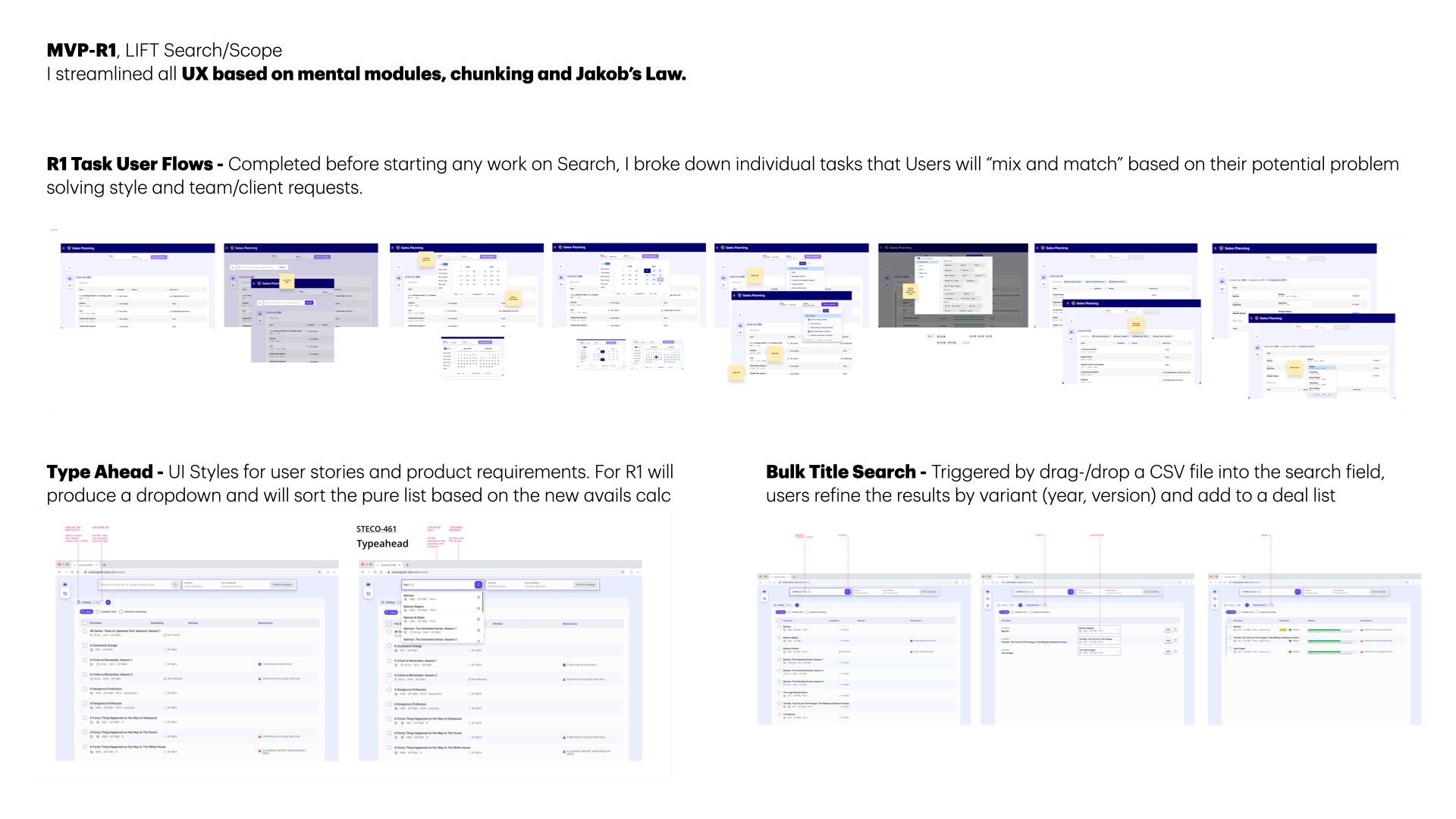
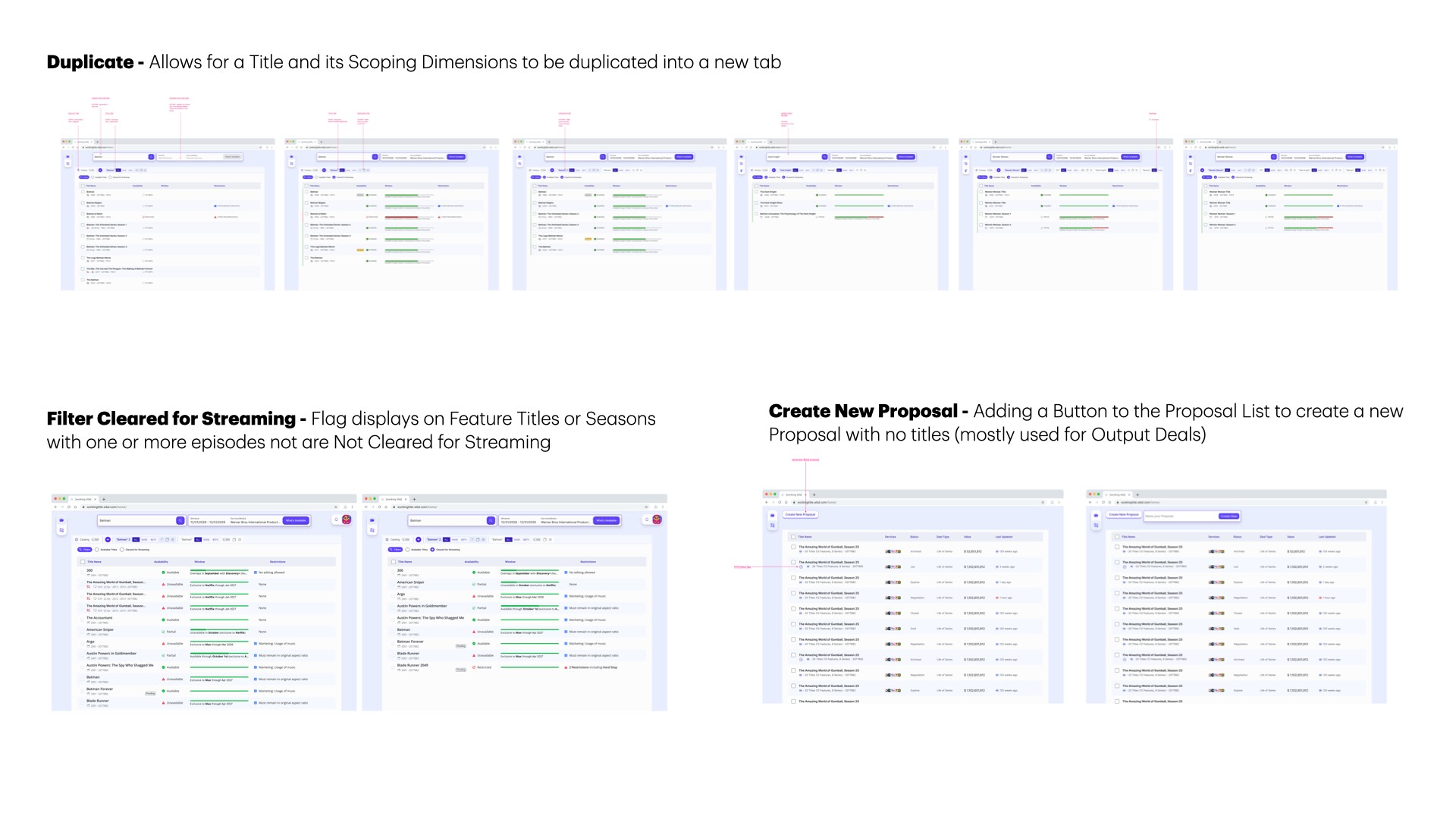
For Search and multi-dimensional scoping, I audited the various flows based on client or marketing need unfurled and re-clustered the UX based on mental modal flows, ensuring visibility and consistency. Allowing for full title visibility, complex filtering and live-load date ranges and service platforms.
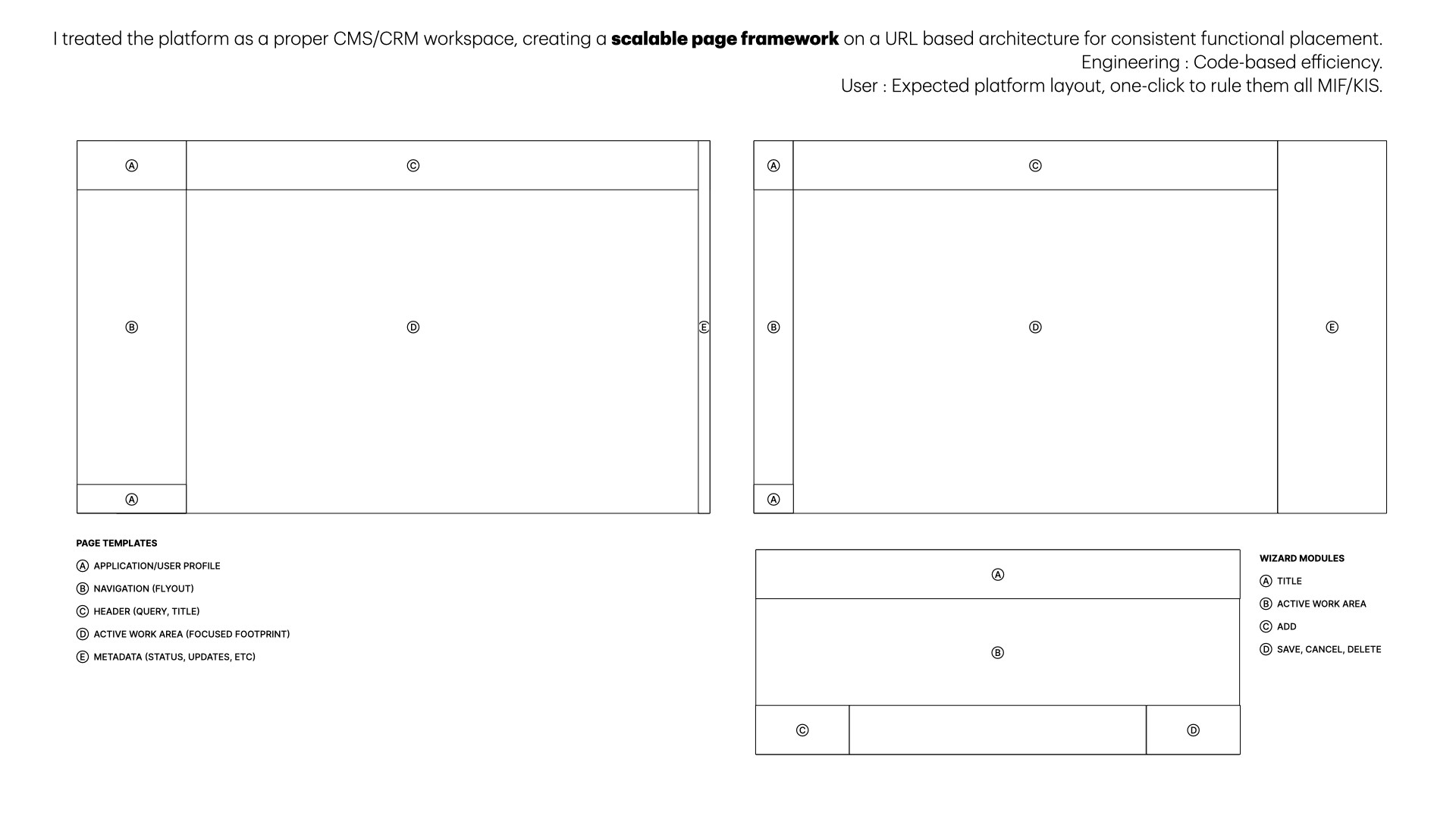
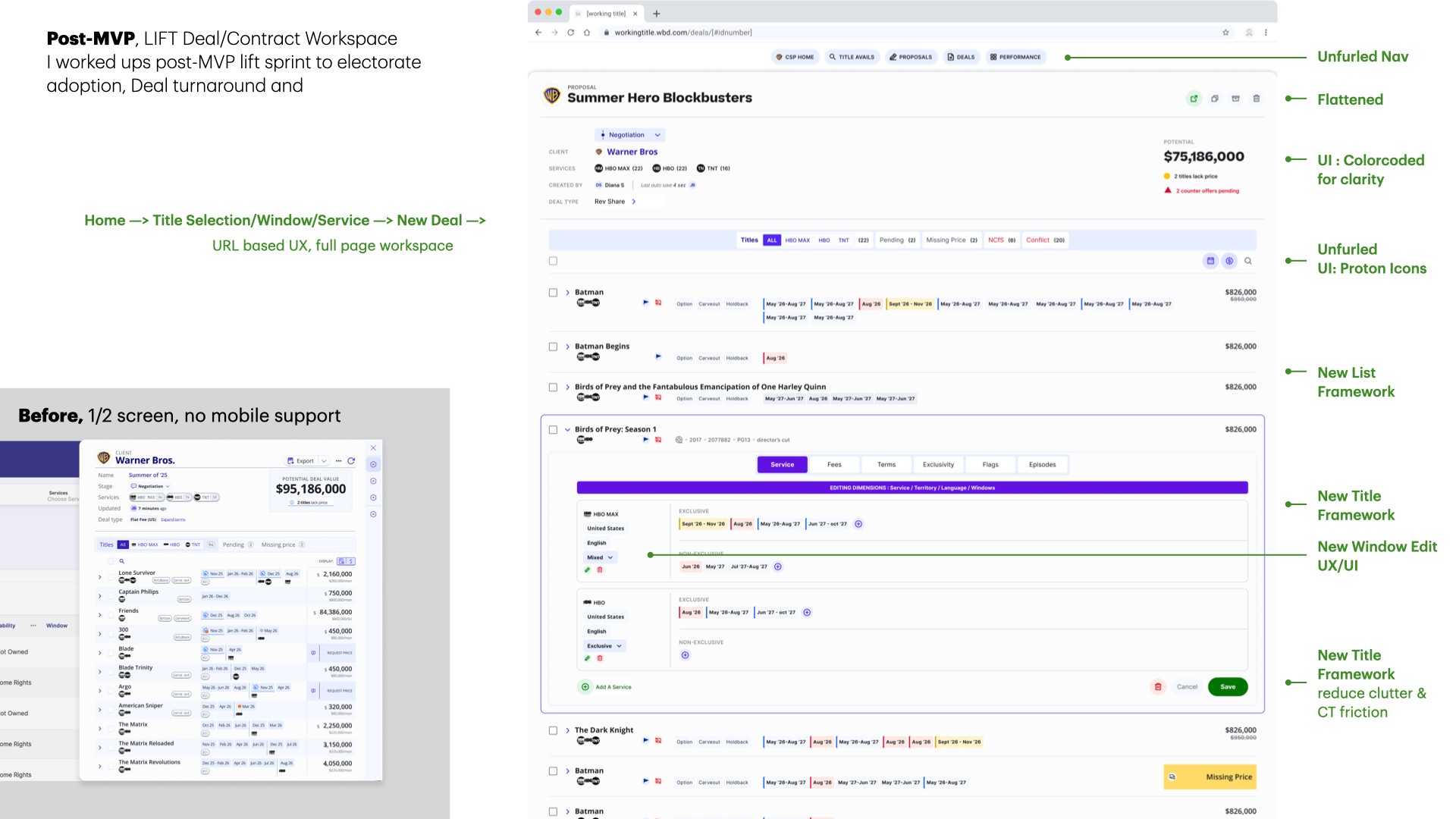
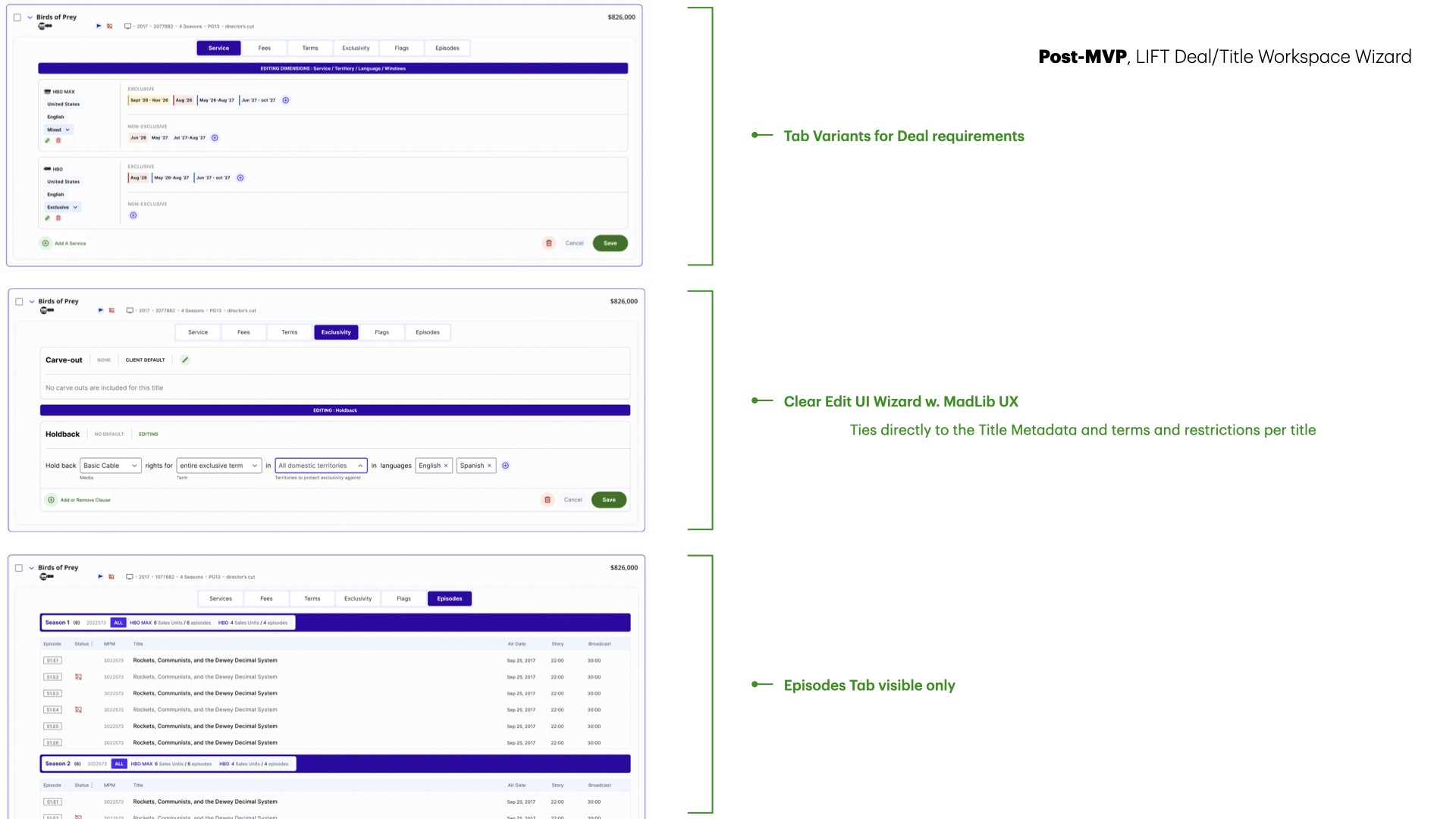
On the Proposal & Title UX, I proposed replacing a rigid flyout-based layout with a URL-driven "Zone Framework," transforming squeezed sidebars into expansive, responsive work environments built for deep focus. Working closely with engineering and the designers, we introduced spreadsheet and mad-lib inspired ergonomics that allowed planners to track, filter, and adjust $150M+ deal negotiations on a single screen.
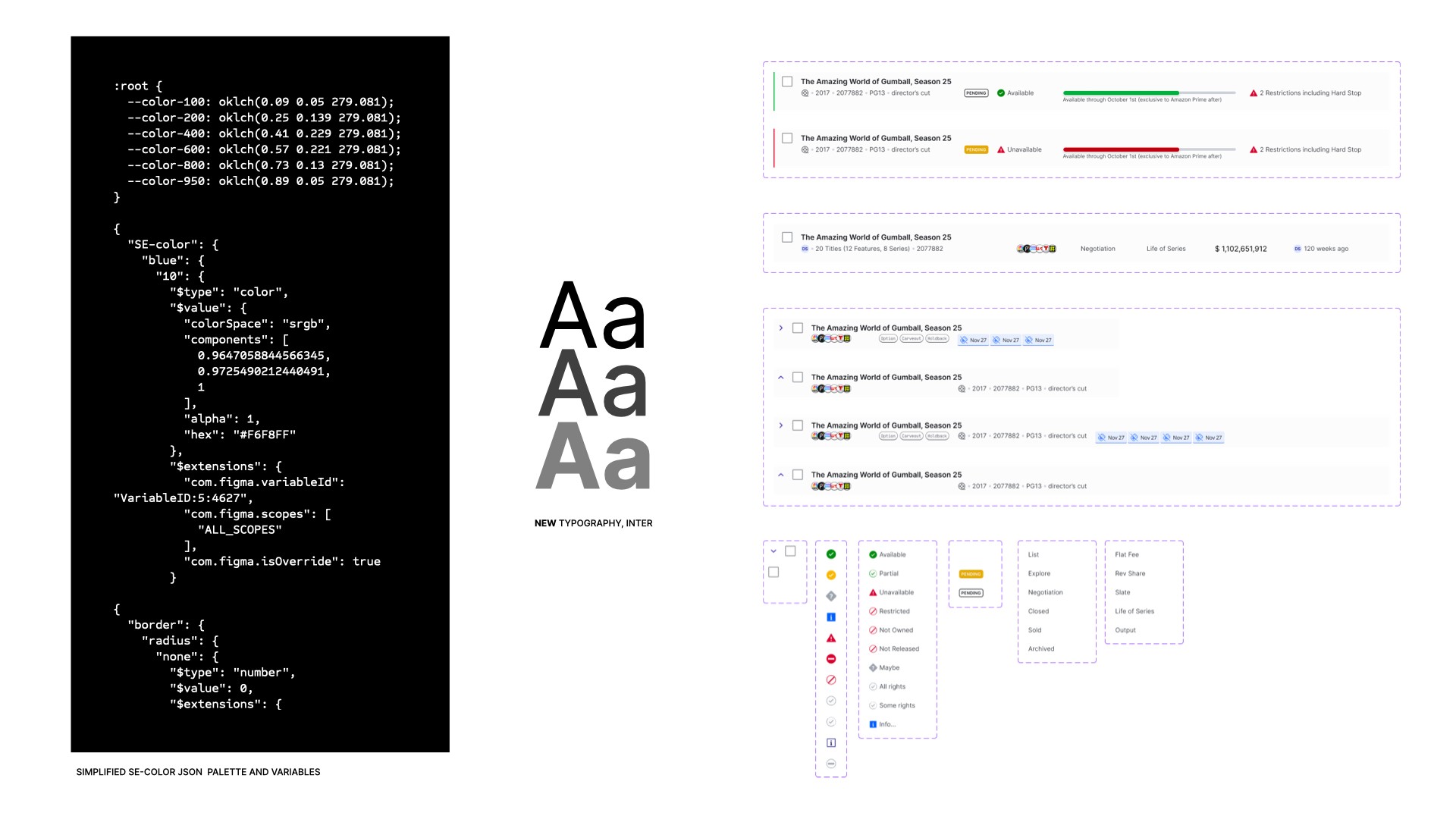
The UI also received a lift for legibility and visual frictions when viewed across various screen sizes and resolution types. To ensure this new vision held firm as we scaled, the team took over building a tokenized JSON design system to keep code and UI perfectly aligned.
The result was more than just a cleaner layout, the solution restored momentum to a stalled platform, bringing clarity, human flow, and trust back to an enterprise engine.