
Food52
Food52
Mobile Checkout and retention
Building trust & loyalty between aggressive OKRs and human-centric ux/ui
NDA in PLACE
Confidentiality Notice: Certain information, metrics, and identifying details in this case study have been anonymized, generalized, or omitted to comply with non-disclosure agreements and protect proprietary client data. Specific names and restricted identifiers have been replaced with general descriptions.
Scope: Design Leadership, Strategic Design Sprint, E-Commerce Optimization
Tools: Design Systems, ADA Compliance Audits, Behavioral Analytics
Platform: Multi-Merchant E-Commerce & Editorial Marketplace
Results: 40% Lift in Checkout Conversion
Re-Anchoring on True User Needs
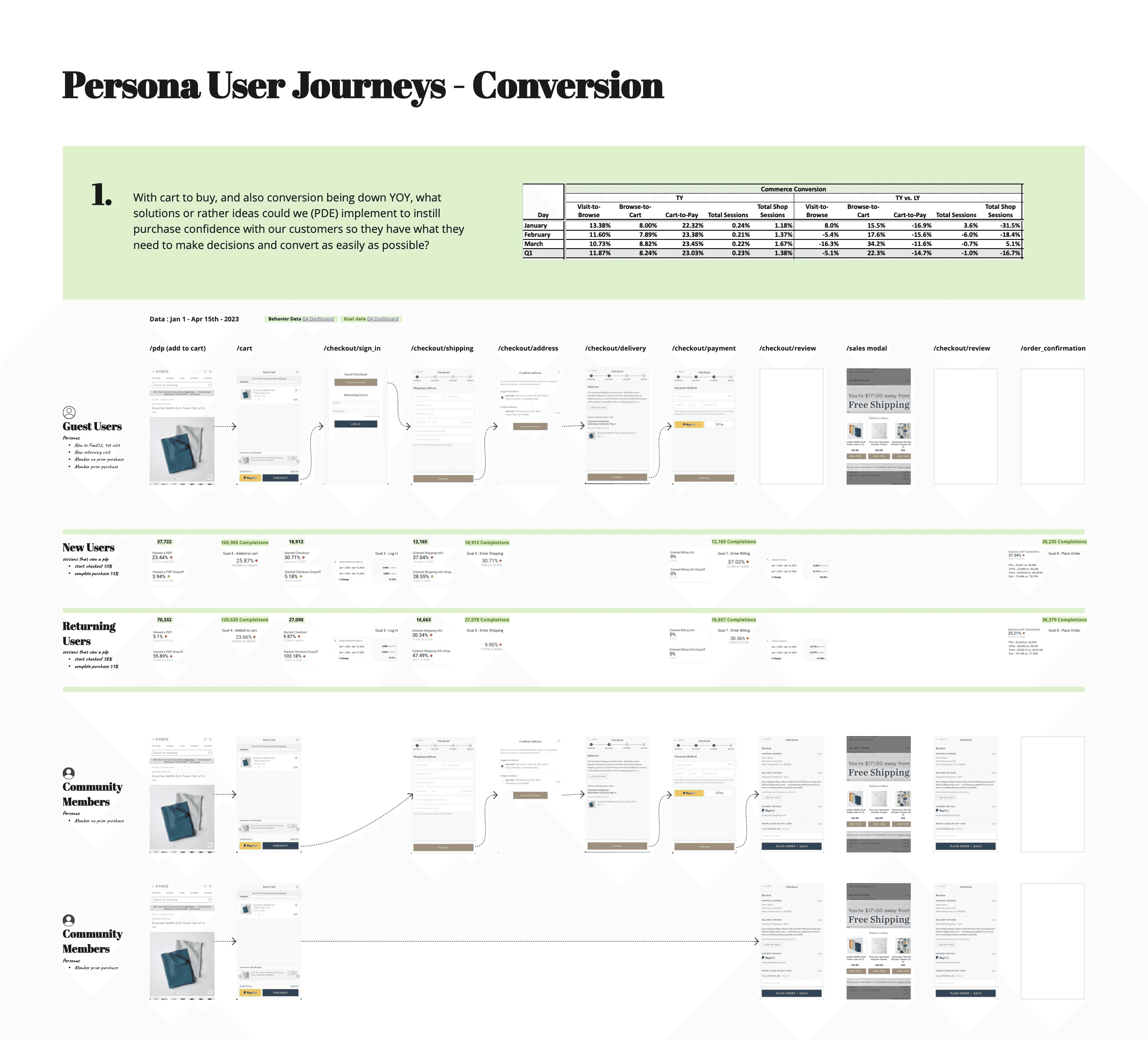
In a high-growth editorial marketplace, it is easy for product teams to rush toward assumptions about what shoppers want. The existing checkout experience was bogged down by friction, unexpected multi-merchant complexity, and misplaced editorial distractions right at the point of purchase. Rather than jumping directly to band-aid UI fixes, I intervened to redirect the team's workflow—pivoting us away from guesswork and into a focused, evidence-based Design Sprint.
The Psychology of Intentional Clarity
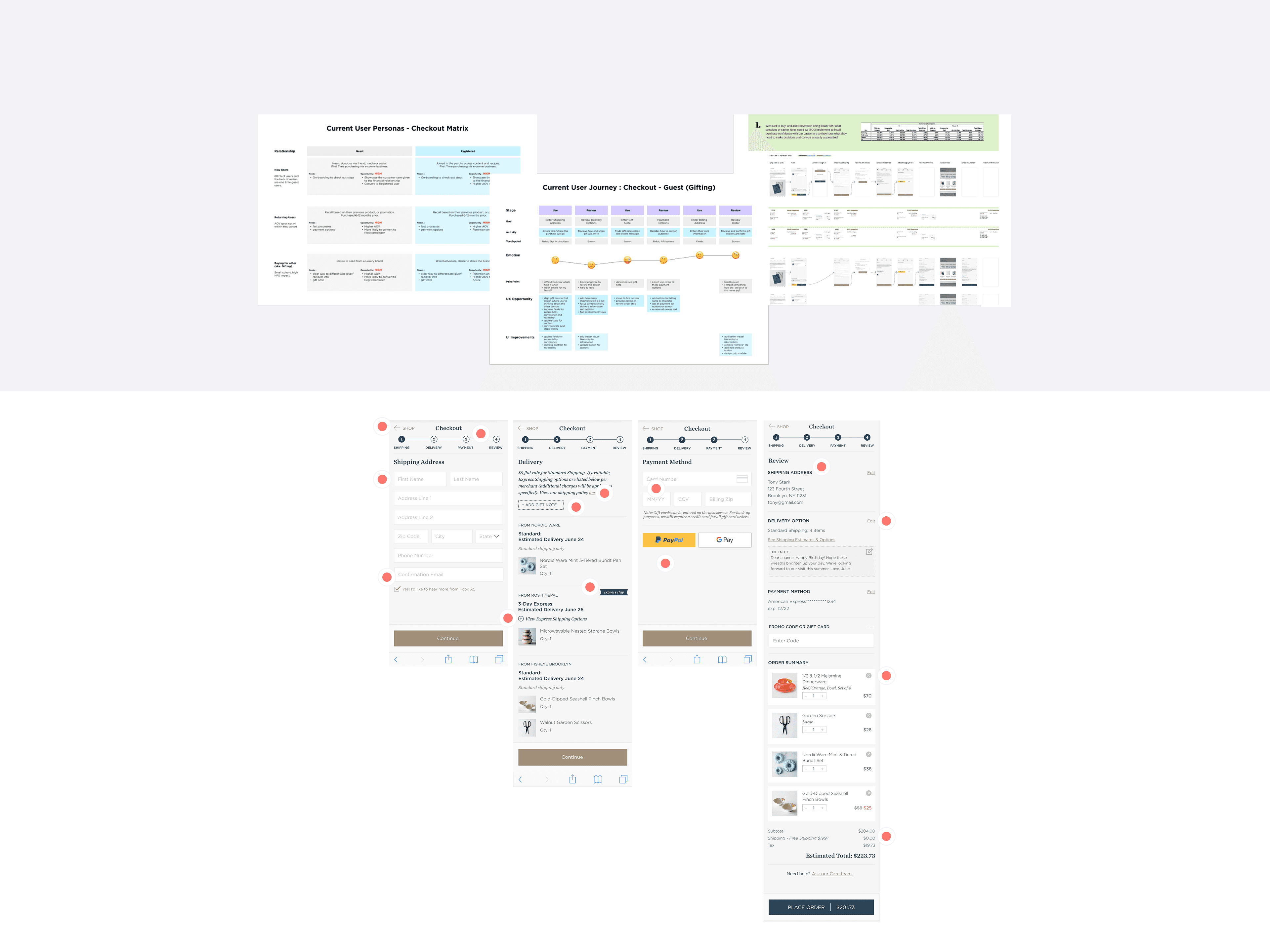
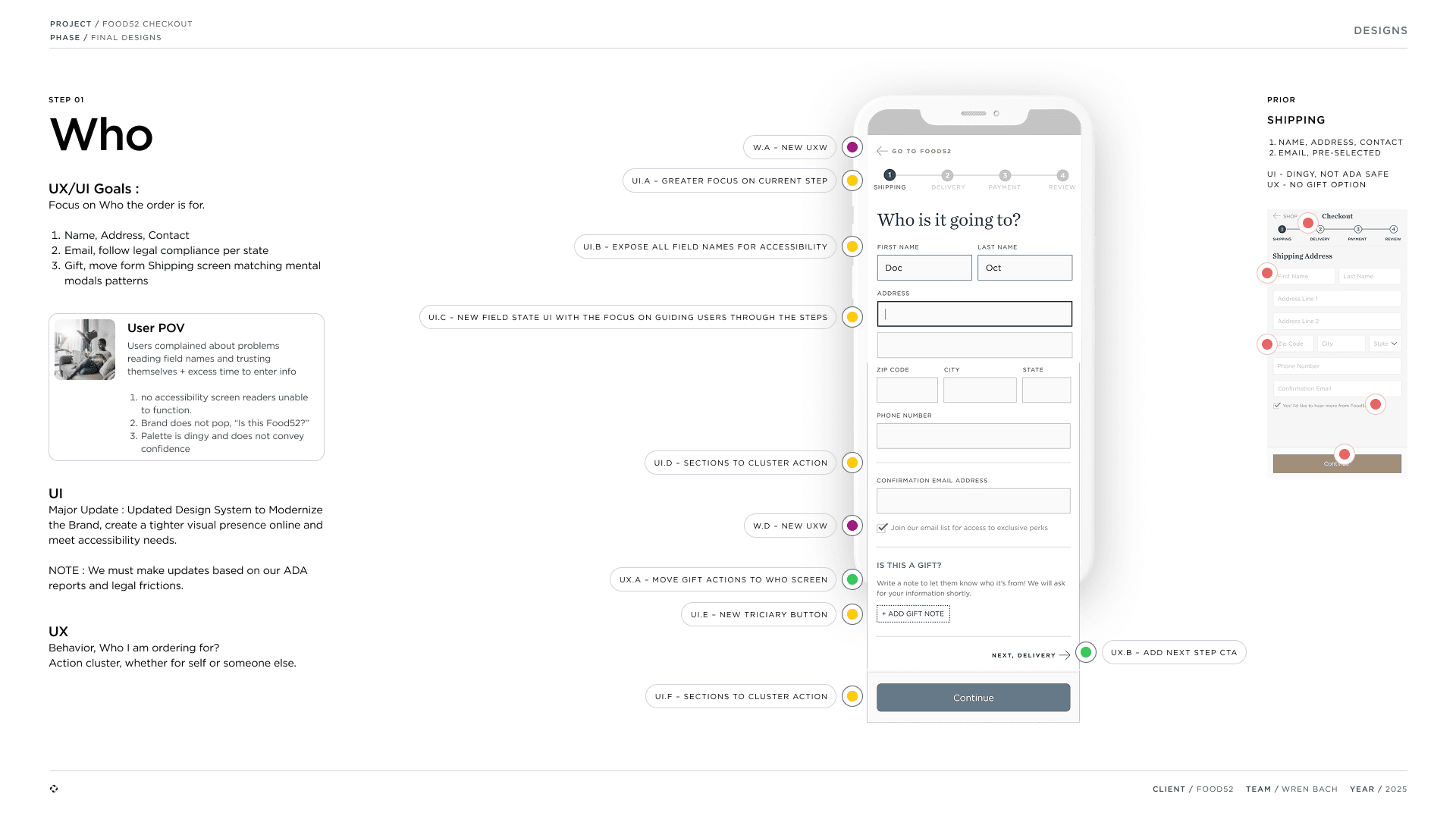
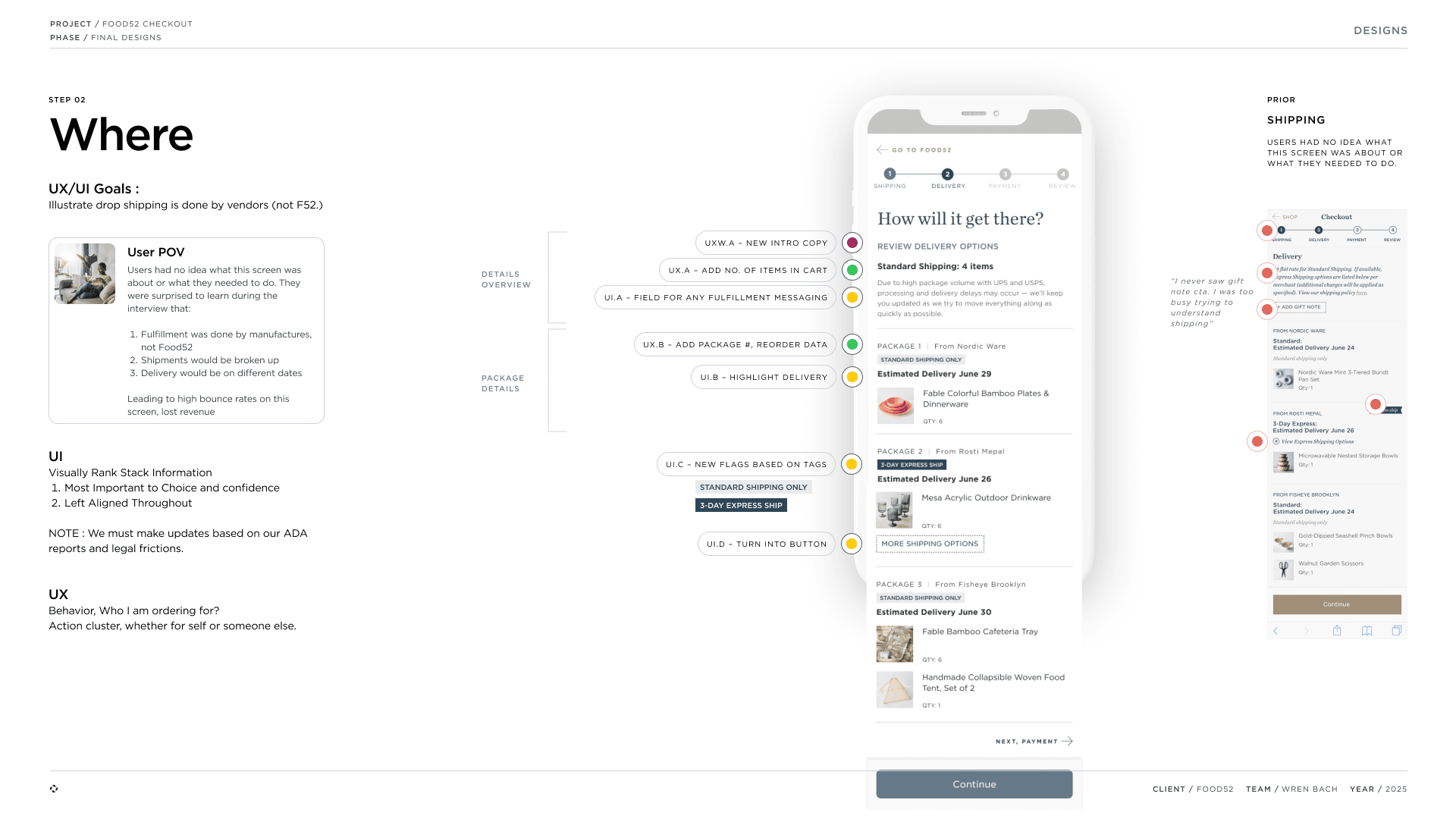
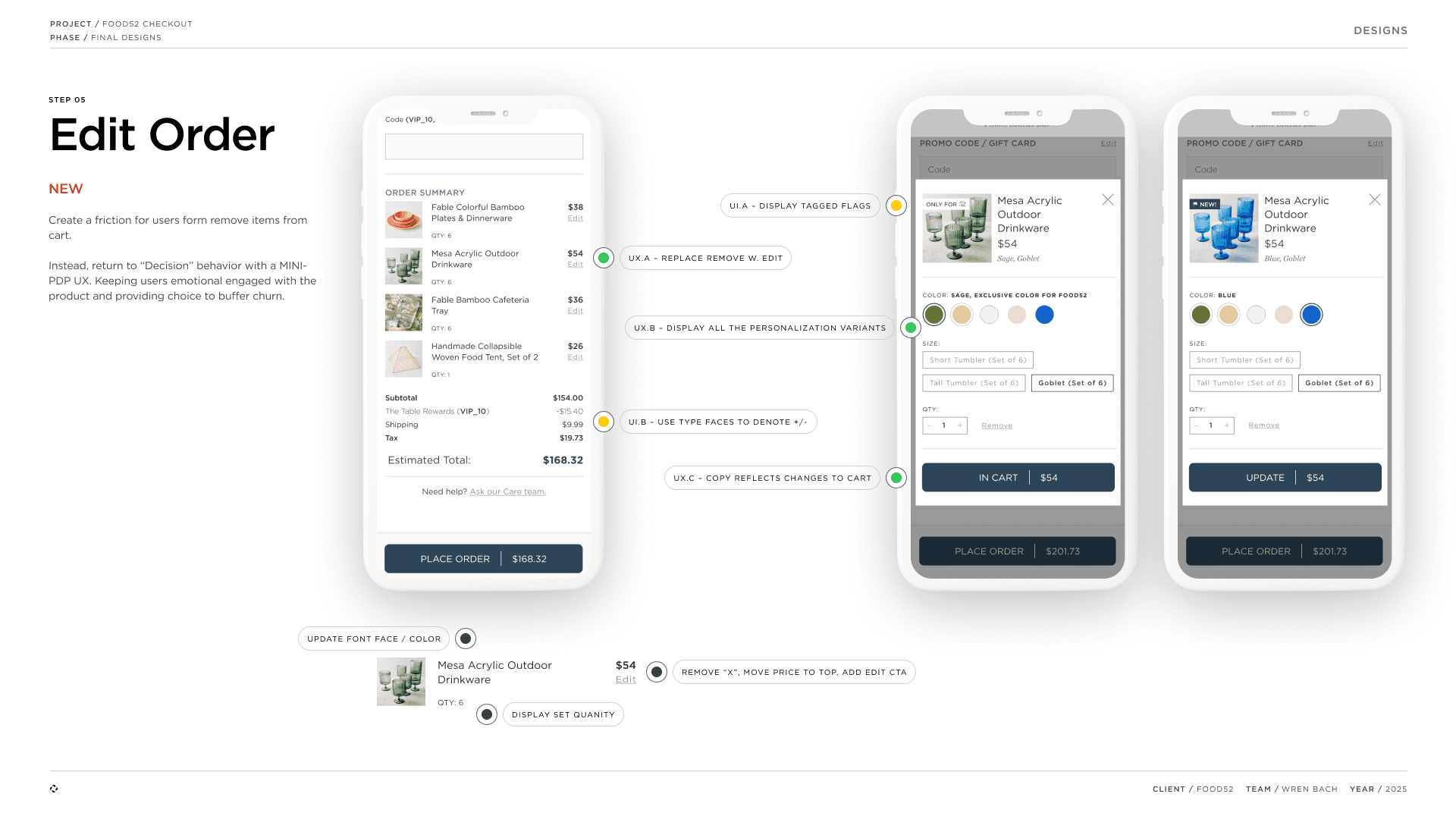
Shopping at Food52 is inherently emotional, but the checkout process demands absolute transactional confidence. Through hands-on sprint facilitation, I guided the team to unpack the psychology of the buying journey. We identified critical drop-off points, stripped away unnecessary cognitive noise, and introduced the concept of "intentional friction"—slowing down just enough on multi-merchant shipping details to give buyers clarity without causing frustration. To ensure the experience was truly universal, we rebuilt the flow from the ground up to meet strict ADA accessibility standards.
Systemic Impact
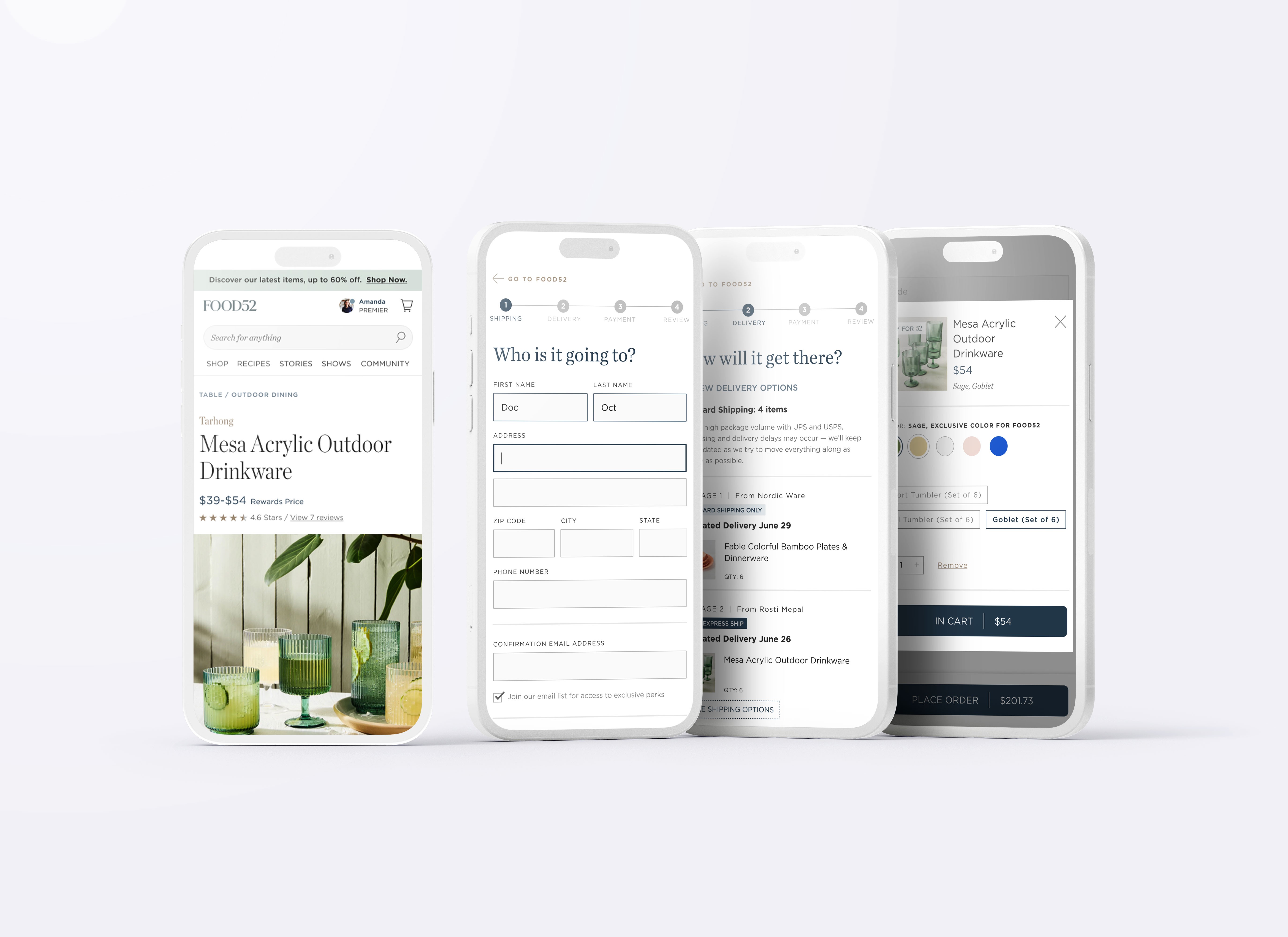
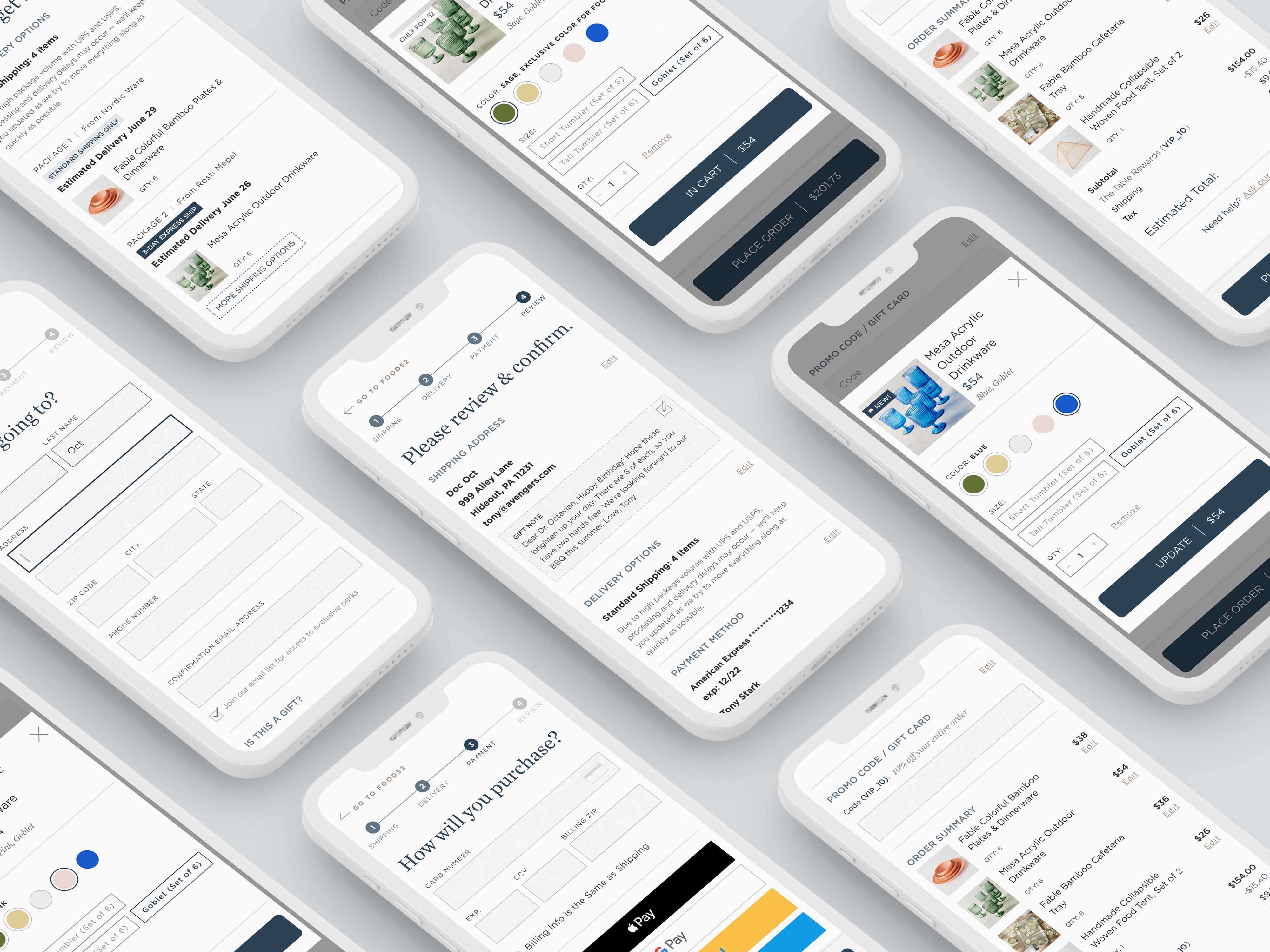
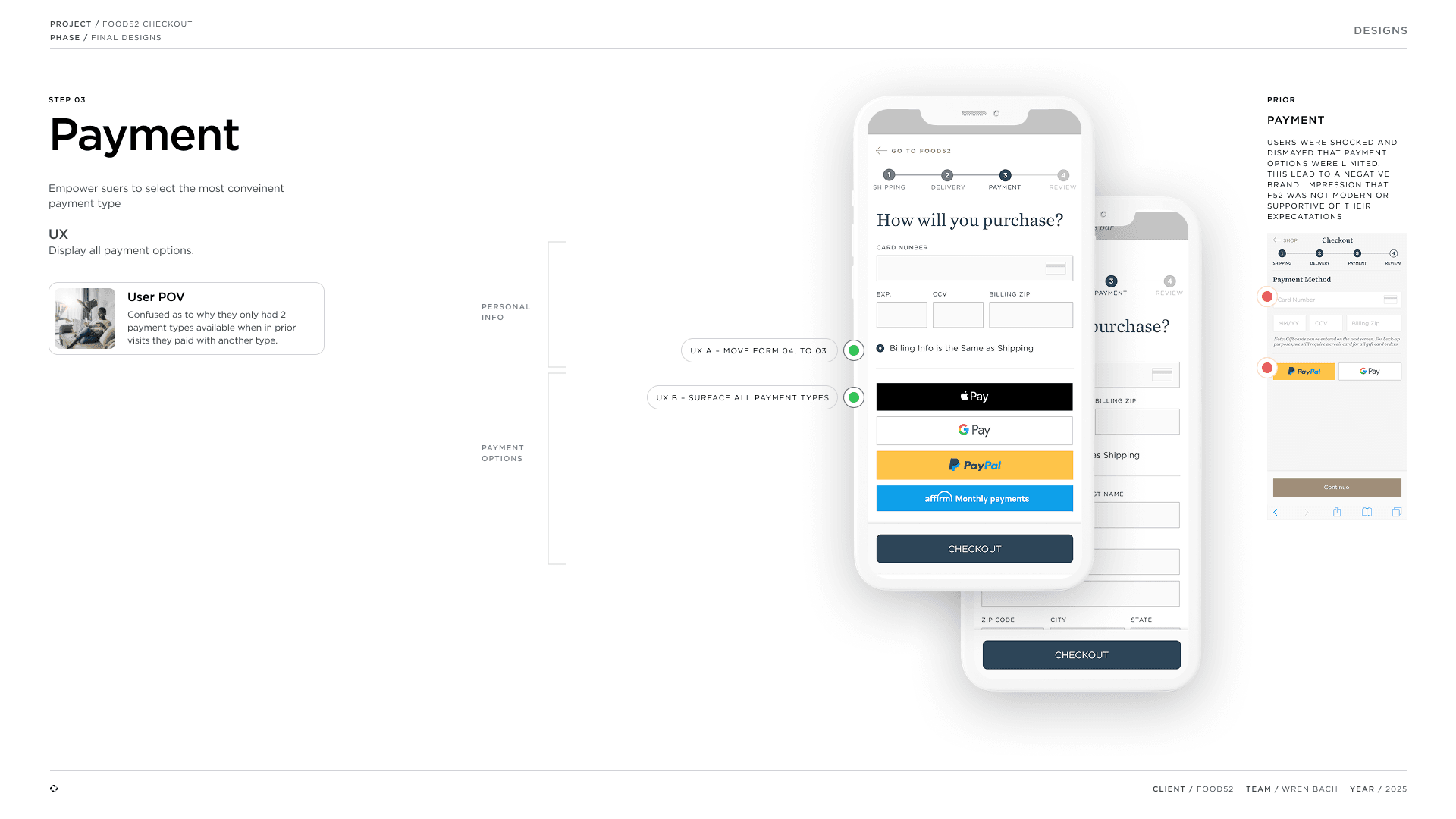
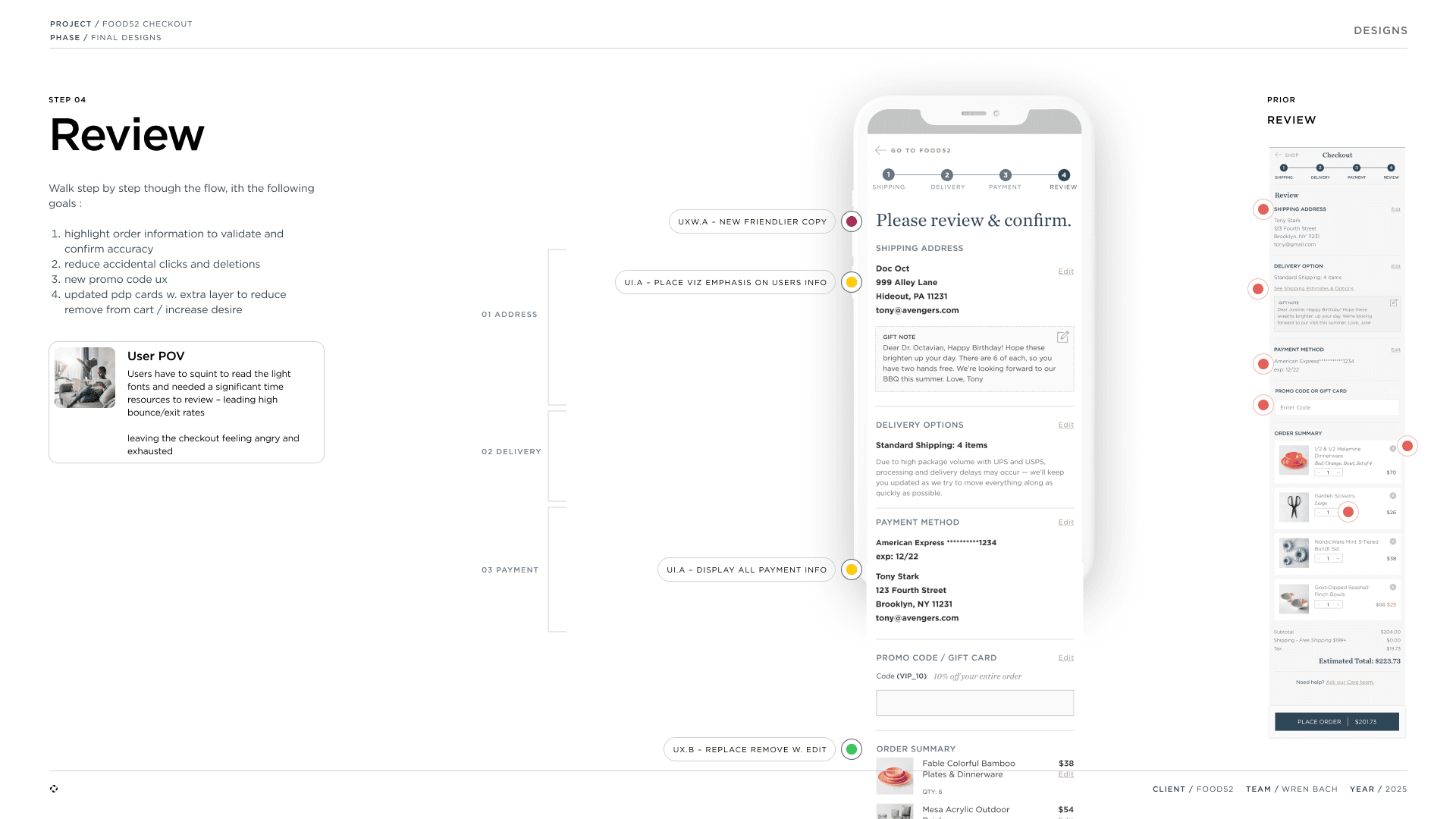
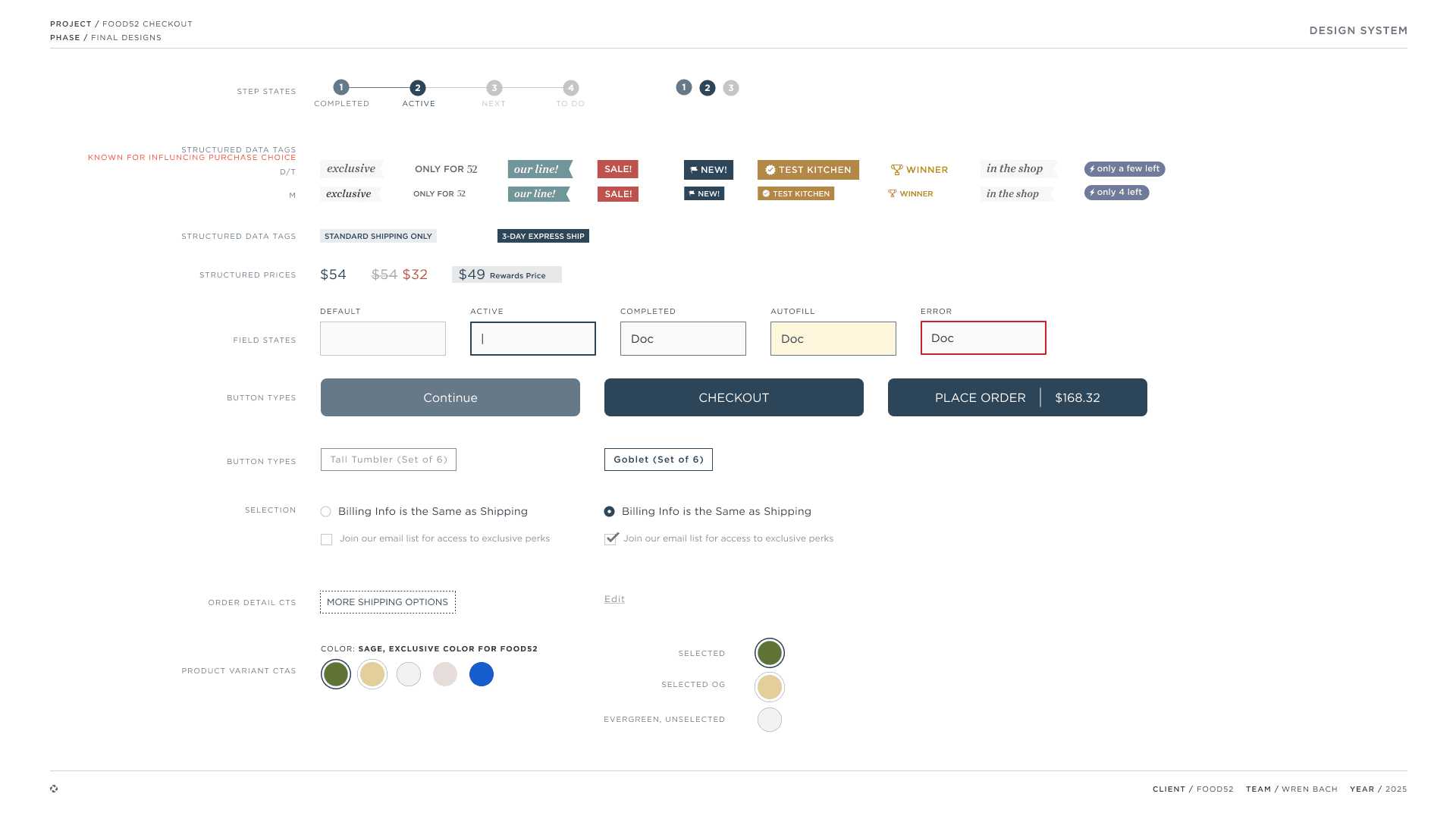
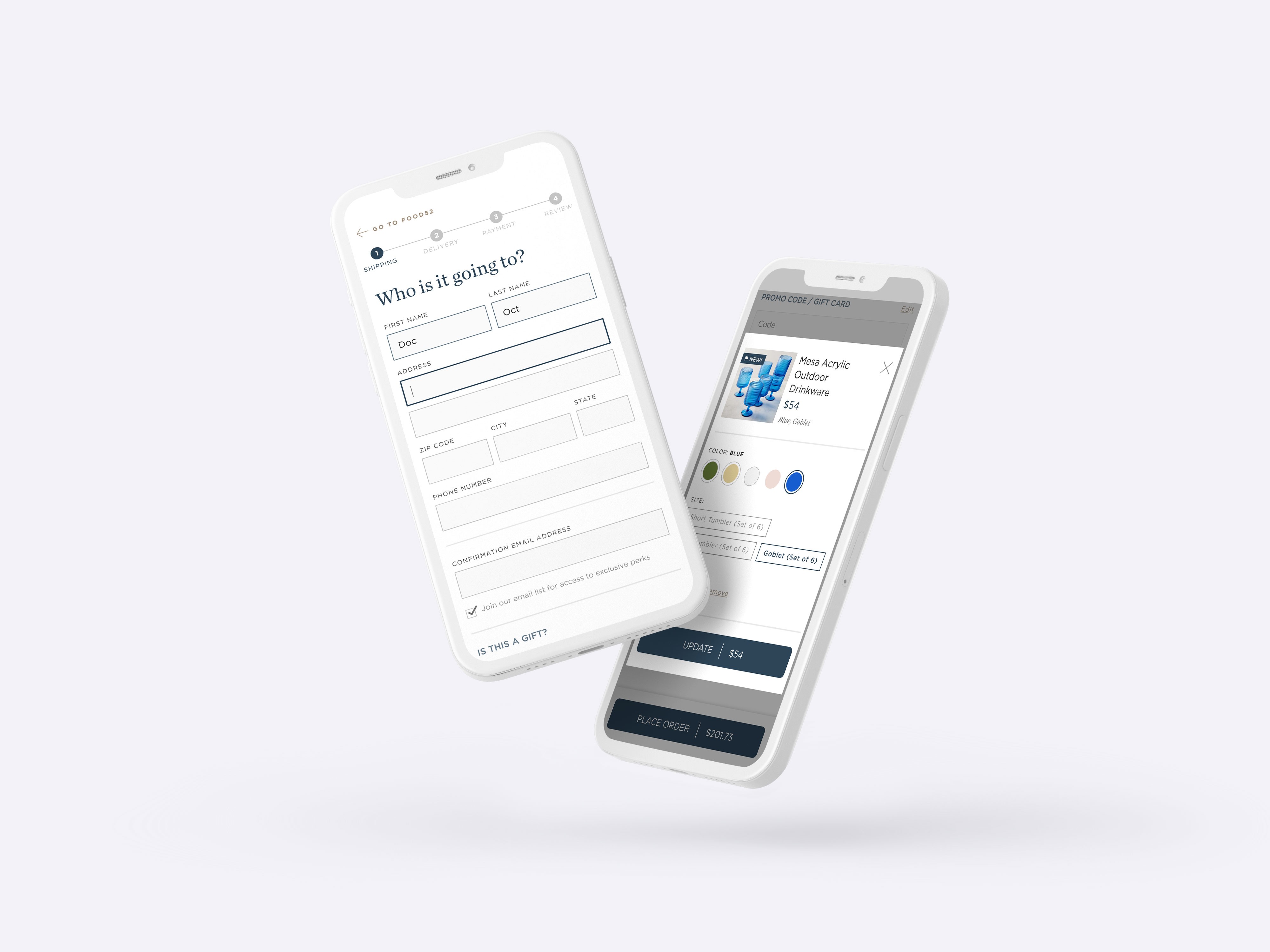
We transformed a fragmented, confusing multi-step checkout into a streamlined, high-trust experience that felt like a natural continuation of the Food52 brand. Re-architecting the flow for clarity and building a scalable, accessible design system eliminated user doubt at the moment of decision. The strategic intervention didn't just align team workflows—it delivered a 40% lift in checkout conversion, proving that when you align design sprint rigor with human intent, measurable business outcomes follow.
The Ecosystem
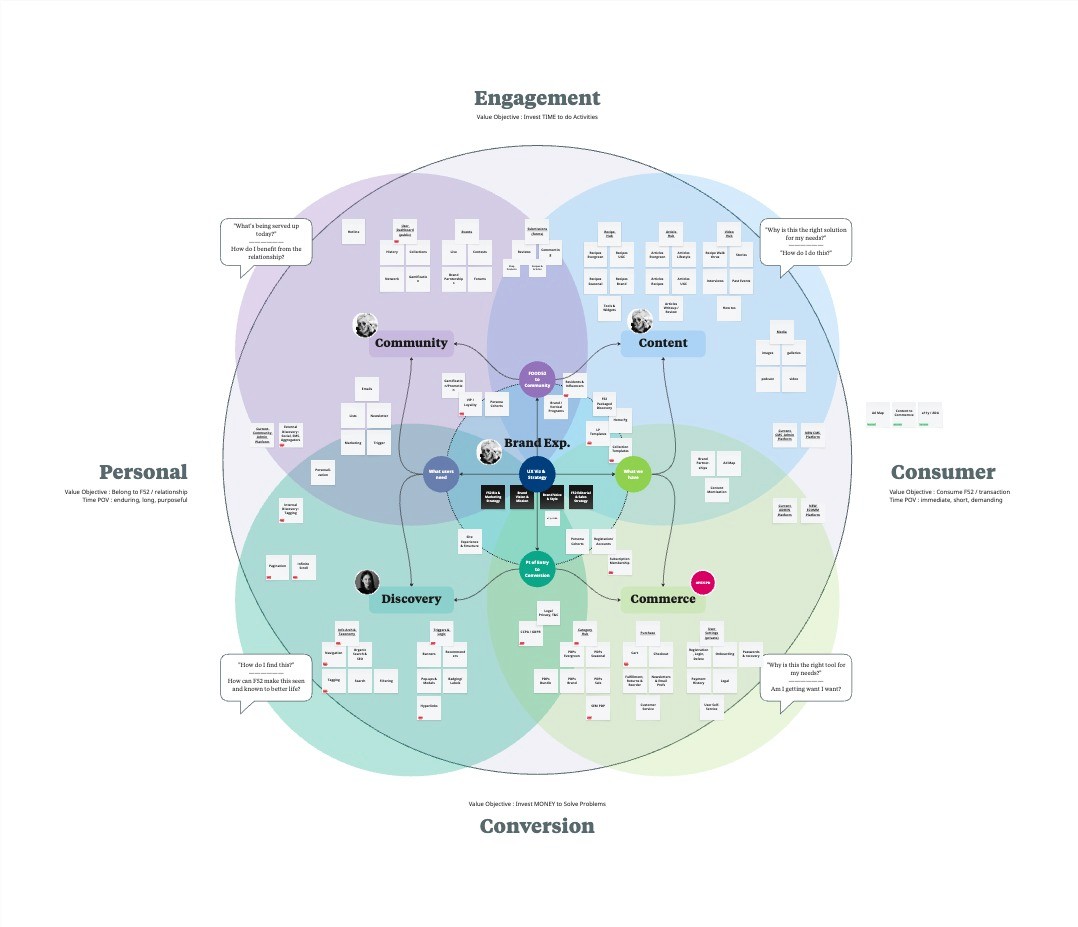
Workshop Metrics